
What the Environment Reveals: Discovering Human Design Through Everyday Life
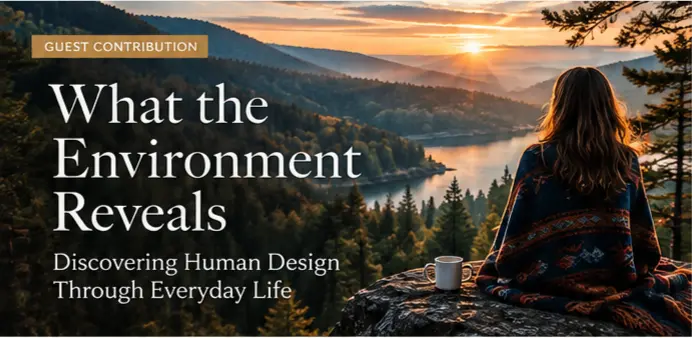
A Sample Guest Contribution — What Your Published Article Could Look Like
This article is an example of how guest contributions are presented in The Codex.
It gives you an idea of the writing style, presentation and level of detail I’m looking for.
Every contribution is individual. You don’t need to follow this exact format or choose the same subject.
I’m interested in original knowledge, thoughtful exploration, research and discoveries that complement the wider fields of study represented in the Codex.
Accepted articles receive their own dedicated page, with supporting images, an author photograph.
If you want to provide one, biography and links to the contributor’s website or professional profiles, where provided.
Your knowledge deserves a place in the conversation.
Where Would You Like To Begin?
There’s more than one way into this work. Choose what calls you.

An Editor’s Sample Contribution to The Codex
Sometimes the most interesting discoveries about ourselves don’t come from studying a chart.
They come from watching life unfold.
We can read about a particular aspect of Human Design, learn its terminology and understand the theory.
But something quite different happens when we begin observing our own experiences.
We start noticing things we may never have thought to question before.
One of the most interesting examples is the way people behave differently depending on their surroundings.
The Same Person, a Different Environment

Consider the difference between meeting someone in a familiar workplace and meeting that same person somewhere completely different.
Their manner might change.
They may become more relaxed, more talkative, quieter or more guarded.
The person hasn’t necessarily changed. But the environment has.
This is something that can be observed in ordinary life, particularly when our work takes us into different settings.
For example, working in a salon creates a particular environment.
People come into that space, settle into familiar routines and interact within an established atmosphere.
Working mobile is different. Instead of people entering your environment, you enter theirs.
You begin to see people in their own homes, surrounded by their own belongings, routines and relationships.
You may notice aspects of their behavior that were never apparent in the salon. It raises an interesting question:
How much of what we experience is influenced by the environment we’re in?
Looking at Environment Through Human Design.
Human Design offers a way of exploring this question through its environment concept.
Rather than treating environment as simply a preference for a particular place.
It invites us to examine the relationship between our surroundings and the way we experience life.
In True Sidereal Human Design, the chart provides a framework for investigating these mechanics using the visible astronomical sky.
But the chart is only the starting point.
The real experiment happens when we observe our lives.
Do we respond differently in different surroundings?
Are there places where interactions feel more natural?
Do certain environments bring out behaviors that we rarely see elsewhere?
These are questions worth exploring rather than answering automatically.
The Value of Observation

One of the most valuable things we can do is become curious about what we experience.
Instead of immediately deciding that someone is difficult, withdrawn or unusually confident, we can ask whether the setting is influencing the interaction.
Instead of assuming that we behave exactly the same everywhere, we can observe the differences.
This doesn’t mean the environment explains everything. People have their own personalities, experiences and circumstances.
It simply means that our surroundings are worth paying attention to.
And sometimes an observation made in everyday life can open the door to a much bigger discovery.
Try Your Own Experiment
For the next seven days, notice how you experience different environments. Pay attention to:
- Where do you feel most comfortable being yourself?
- Do you communicate differently in different places?
- Are there environments where you become more observant or more withdrawn?
- Do you notice changes in other people’s behavior depending on their surroundings?
The Codex Is Built Through Observation
Don’t rush to interpret what you see. Just collect your observations.
You may discover something you hadn’t previously considered.
Human Design becomes much more interesting when we take what we learn and compare it with what we actually experience.
A chart can give us something to investigate, but our lives provide the opportunity to observe it.
That’s the spirit of The Codex: sharing experiences, asking questions, noticing patterns and contributing discoveries that help expand our understanding.
What have you noticed in your own life that made you look at yourself, other people or the world differently?
That observation might be worth sharing.
About Author

Sarah Smith – Mother of two, runs a successful online business offering astrology readings.
Explore Further

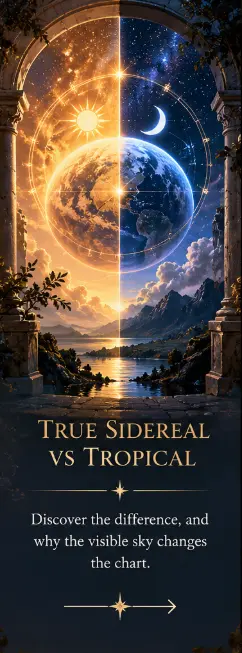
True Sidereal vs Mainstream Human Design — understand the difference in the astronomical calculations.
Aura Types
Discover the five aura types and explore how each has its own way of engaging with life and interacting with the world.
The Ancient I Ching — 64 Gates
Explore the ancient wisdom of the 64 hexagrams, with each gate opening into its own page of meaning, insight and discovery.
Profiles
Discover the twelve profiles and the six line themes that shape our approach to life, relationships and experience.
Readings
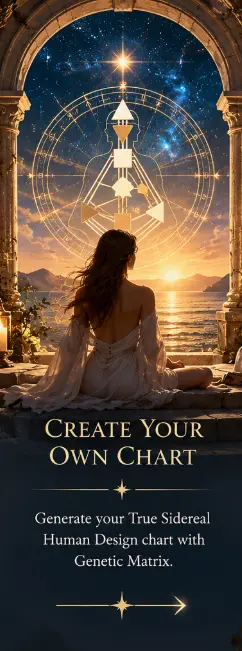
Go deeper into your own True Sidereal Human Design chart. Explore the readings available to help you understand your design and its individual mechanics.
The Shop
Browse journals, eBooks and digital resources created to support your exploration, learning and personal experiments.

Bring Your Knowledge. Share Your Discoveries.
The Codex welcomes ideas, insights and discoveries from many different fields of knowledge.
Perhaps you explore astrology, numerology, tarot, the I Ching, mythology, ancient wisdom or other traditions that offer another perspective on understanding ourselves and the world around us.
Have you uncovered an interesting connection, explored an ancient teaching, noticed a pattern or developed an idea worth sharing?
I welcome thoughtful contributions that complement, expand and enrich the wider exploration of human experience.
Different perspectives. Shared discoveries. A growing body of knowledge.
Have something to contribute? We’d love to hear from you.
Mastering the Zodiac
Explore your birth chart through the real positions of the planets in the sky.
Mastering the Zodiac offers personalized True Sky reports, including an in-depth natal report covering planetary placements, houses and aspects, as well as a Yearly Transit Report exploring the major planetary influences shaping the year ahead.
A resource for those who want to explore their birth chart, gain deeper self-understanding and discover what the sky reveals.
This is an affiliate recommendation. If you purchase through my link, I may receive a commission at no additional cost to you.